01 / Case study
uBreakiFix
Designing a better store for everyone who had to use it.
- Client
- uBreakiFix · Store of the Future
- Role
- Design Researcher · Workshop Facilitator · Design Strategist
02 / Four people
One store. Four very different experiences.
There wasn’t one user. A repair store is shared by people who want different things from the same room, and who are in it for very different lengths of time — a customer for twenty minutes, a technician for a whole working day.
So the store couldn’t be designed around the person walking through the door. It had to work for everyone standing behind the counter, at the bench, and paying for the fit-out.
01
Customers
Trust + clarity
02
Front-desk staff
Efficient service + handoffs
03
Technicians
Focus + functional workspace
04
Franchisees
Practicality + repeatability
03 / The tension
The glass wall.
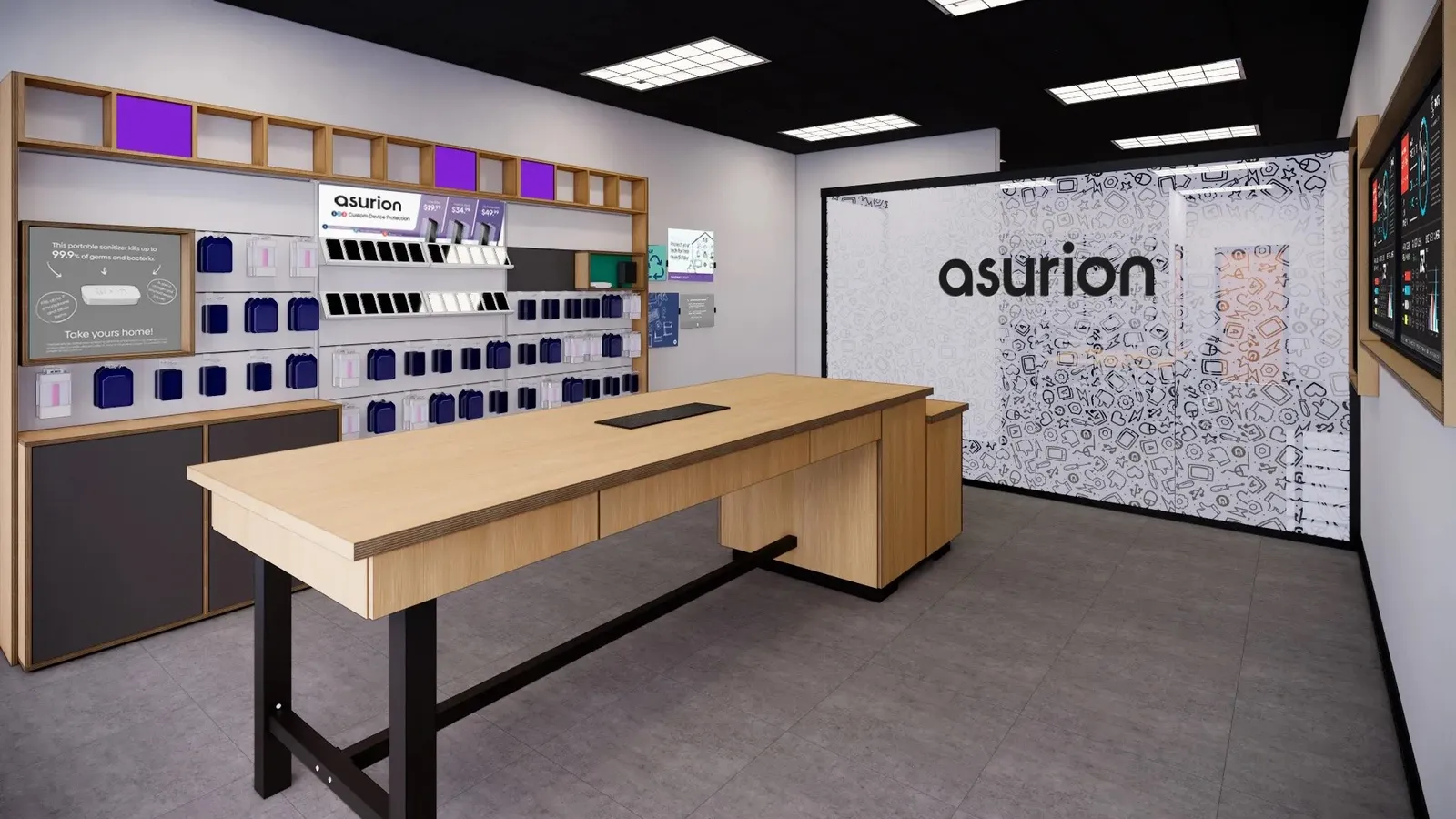
Put a glass wall around the repair area and customers can watch their device being fixed. It reads as openness: nothing hidden, real people doing real work. Customers responded well to it.
Now imagine standing behind that glass for eight hours a day.
What customers wanted
To see what was happening to their device, and know it was in good hands.
What technicians needed
To concentrate on difficult, delicate work without being watched all day.
Both are right.
A good customer-experience decision had just become a bad employee-experience decision, and nobody in the room had been wrong. That tension became the test every idea had to pass.
04 / A system
A system, not a journey.
This is why we ran the research as co-creation labs in cities across the United States, with customers, technicians, front-desk staff and franchise owners in the room together rather than interviewed separately. Participants built, arranged and argued over store concepts themselves.
Separate interviews would have produced four wish lists. Putting the groups in the same room surfaced the places where one group’s improvement was another group’s problem — which is the only thing worth designing around.
Physical space
- Customer
- Front desk
- Technician
- Franchisee
Technology
05 / What we learned
Contradictions, turned into rules.
Across the labs we looked for patterns rather than requests: moments where expectations weren’t met, behaviours that kept repeating, and — most usefully — the conflicts between groups.
The job was to take a large amount of sometimes contradictory material and turn it into something designers and the business could actually make decisions with.
- People
- Behaviours
- Tensions
- Design principles
- Store experience
01
Transparency
without surveillance
02
Efficiency
without rushing customers
03
Consistency
without ignoring different store realities
04
Customer experience
without sacrificing employee experience
06 / The store
From one store to a system.
The principles fed into concepts and recommendations for the retail experience — and then into how the stores were actually built. This wasn’t research for a speculative concept.
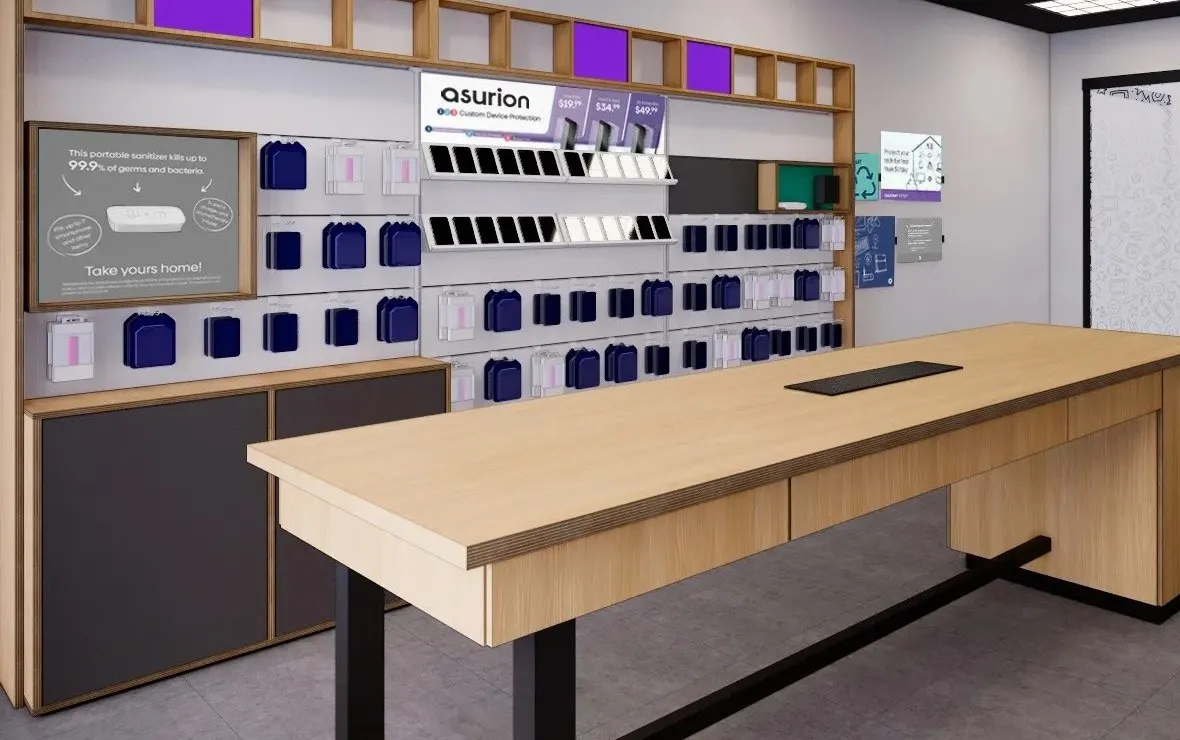
- 01 A new design system for uBreakiFix stores nationwide.
- 02 A newly designed flagship store in the Chicago area.
Looking back
The customer isn’t always the only user.
The best experience had to work for the person walking through the door, the person standing behind the counter, the person repairing the device and the person responsible for keeping the store running.